The Stories Nobody Expects
Most people buy a guitar case hoping they'll never need to test it. These are the stories from musicians who did.
The Fire
New Model Army's studio was entirely destroyed by fire. Everything in it was lost. Except the guitars. They were locked in Hiscox cases and emerged, in their own words, "smelling slightly of smoke but otherwise intact and still in tune."
That quote is real. It's been on every Hiscox brochure since.
The Luggage Truck
On an international tour return, guitars fell off a luggage truck and were run over. Both Hiscox cases took severe external damage. Inside, one Gibson suffered only a bent machine head. A Fender bass came out with barely a scratch.
The cases were destroyed. The instruments were not. That's the whole point.
The Runaway Trailer
A trailer carrying over 30,000 dollars worth of guitars detached from its hitch after hitting a road obstruction in Kentucky. The trailer and cases took the impact. Every single guitar survived.
The Motorcycle Accident
A saxophonist was dragged under a garbage truck while riding a motorcycle. The Hiscox case stayed secured to the bike and protected the instrument throughout a 50-centimetre drag under the vehicle. The case was battered. The saxophone was fine.
The International Shipping Test
A classical guitar was shipped from Atlanta to Singapore in a Hiscox Pro II. That's roughly 10,000 miles through multiple handling facilities, climate zones, and baggage systems. It arrived in perfect playing condition.
Guitar makers Mayones shipped a Legend T to France via courier. The external packaging arrived severely damaged. The guitar inside the Hiscox case was untouched.
Why These Stories Matter
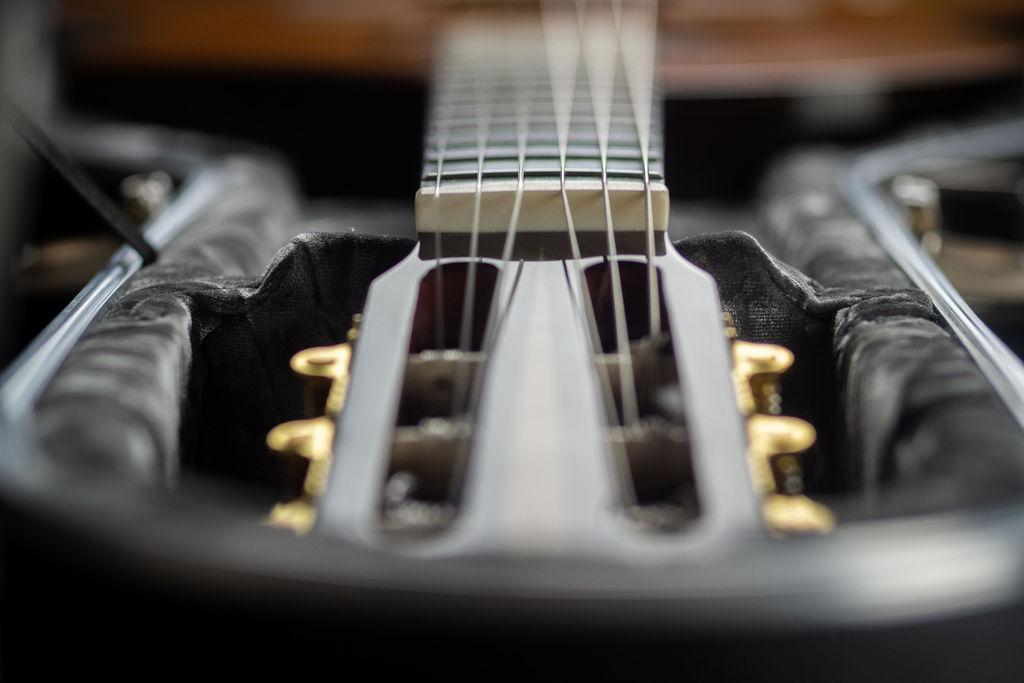
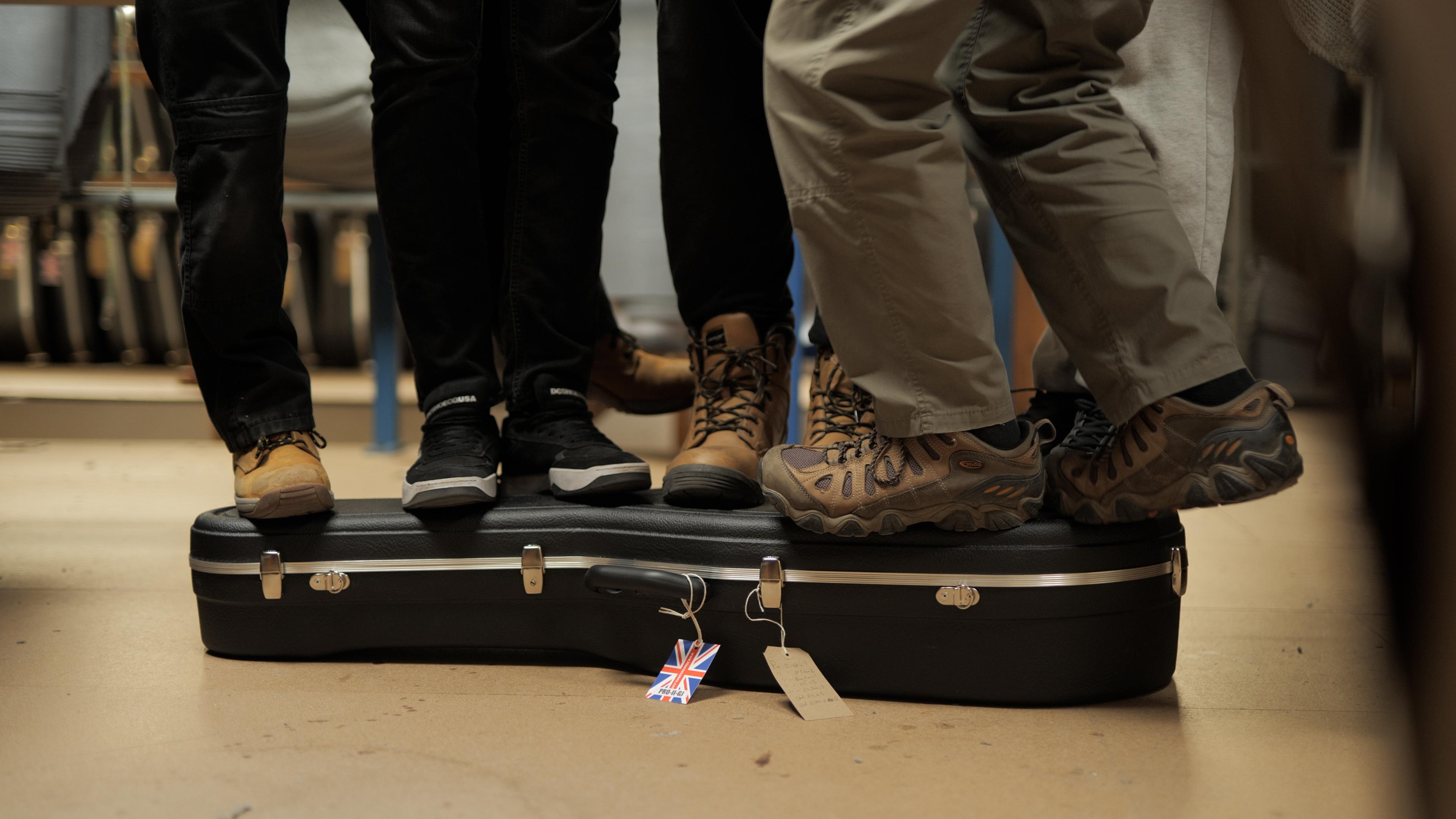
These aren't laboratory tests. They're real incidents where the case was the only thing between an instrument and total destruction. The 500kg crush strength, the bonded foam construction, the aluminium valance holding everything together. All of it designed by a master luthier who understood exactly how guitars break and what it takes to stop it happening.
Practical Tips for Travelling
If you're flying, gigging, or shipping an instrument, here's what actually helps:
- Use a hard case. A gig bag is not protection. It's a carrier. For checked baggage, flights, or any journey where your guitar leaves your hands, a hard case is not optional.
- Loosen the strings slightly. Reduces neck tension during pressure and temperature changes. A quarter-turn on each tuner is enough.
- Fill any gaps. If there's space between the guitar and the case interior, custom fit cushion pads are the proper solution. They're designed to pack out the interior for a snugger fit tailored to your specific instrument. No movement means no risk.
- Take photos before you travel. Document the guitar's condition. If something does happen, you'll need evidence for an insurance claim.
- Label the case. Obvious, but easily forgotten. Name, phone number, and a "FRAGILE" sticker won't guarantee gentle handling, but they help.
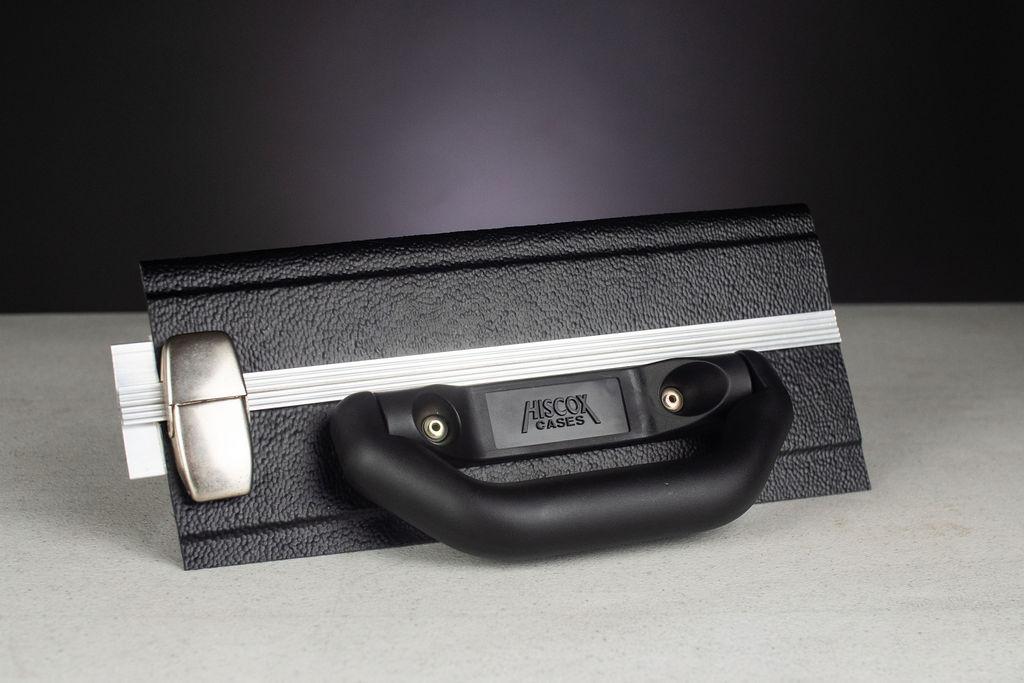
- Carry it on your back. The Hiscox backpack strap system clips onto the four D-ring points on every case. Weight distributed across both shoulders, hands completely free. Walk, cycle, take the train. It's the convenience of a gig bag with the full protection of a hard case.
Why Hiscox for Travel
The Pro II is the case most experienced travelling musicians use if they fly a few times a year. It balances protection, weight, and cost in a way that the alternatives don't quite match.
At around 4.5kg, you're not adding much to your load. At 500kg crush strength, you're covered for anything short of deliberate destruction. And the luthier-designed interior, with variable neck angle support from 0 to 4 degrees, means your guitar sits exactly the way it should, whether it's a Strat, a Les Paul, or a dreadnought.
Browse the full range, or use the case finder to match your instrument.