The Uncomfortable Truth
Most guitars that come in for repair have been damaged in transit. Not on stage. Not during a gig. On the way there, or on the way back.
Dropped getting out of the car. Knocked over at rehearsal. Tipped off a stand in the boot. Caught in a doorframe. Left leaning against a wall that someone walked into.
A gig bag won't save your guitar from any of these. A hard case will.
What a Gig Bag Actually Does
A gig bag is a carrier. It keeps dust off. It gives you a strap to throw over your shoulder. It makes your guitar slightly easier to transport.
What it doesn't do:
- Absorb impact. Drop a guitar in a gig bag from waist height and you're looking at a cracked headstock, a snapped neck, or at minimum a very expensive repair.
- Resist crushing. Put anything heavy on a gig bag and the guitar takes the load directly.
- Protect from temperature. Gig bags offer zero insulation. Leave your guitar in the boot of a car on a cold night in a gig bag and the temperature swings can crack finishes, loosen glue joints, and warp necks.
- Protect from humidity. Acoustic guitars are especially vulnerable. Wood moves with moisture. A gig bag does nothing to buffer that.
What a Hard Case Does
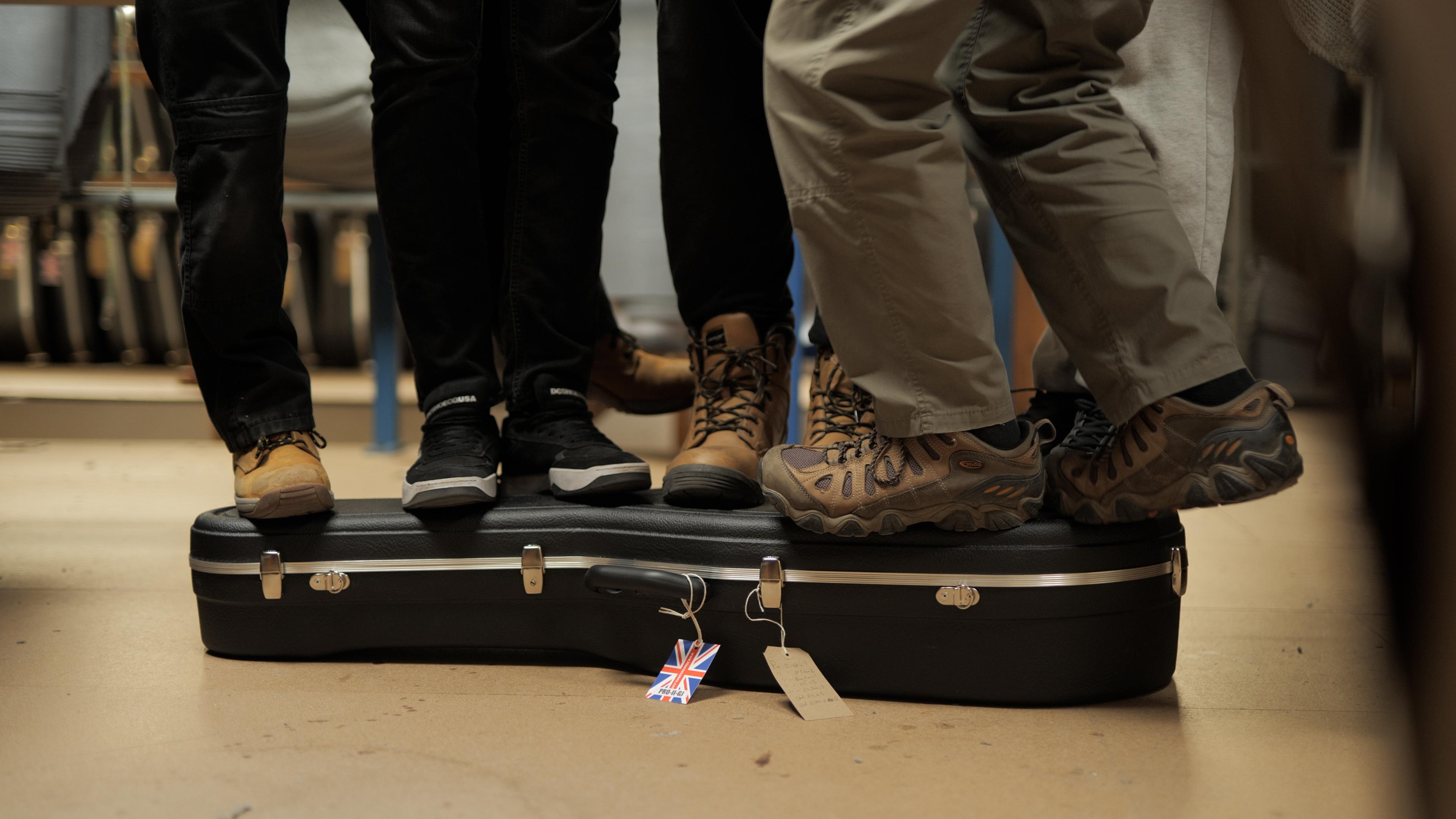
A Hiscox Pro II weighs about 4.5kg and withstands 500kg of crushing force. The ABS shell is waterproof. The foam interior insulates against temperature swings and humidity changes.
Guitars inside Hiscox cases have survived fires, truck accidents, and 10,000-mile shipping journeys. A gig bag wouldn't have survived the first thirty seconds of any of those incidents.
The Maths
A Hiscox Pro II electric guitar case costs around 185 quid.
A headstock repair on a Gibson starts at 200 to 300 quid, if it's repairable at all. A cracked neck on a bolt-on can be 150 to fix. A cracked neck on a set-neck guitar like a Les Paul is often a write-off.
One drop. One accident. One moment of bad luck. The case pays for itself before you've left the house.
The Luthier's Advantage
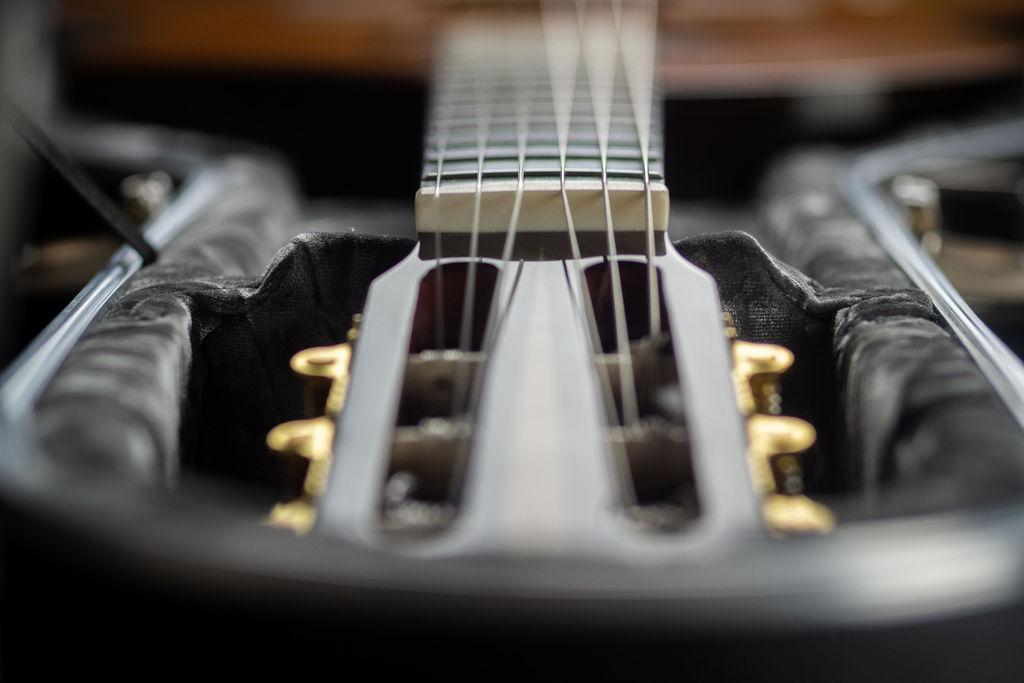
Here's something worth knowing. Hiscox cases were designed by a master luthier who spent years building guitars by hand. He didn't just design a box with foam in it. He engineered the interior to support the instrument the way it needs to be supported.
Every Hiscox case accommodates neck angles from 0 to 4 degrees. The headstock is cradled, not clamped. Pressure is distributed across the body, not concentrated at the vulnerable points. It's the kind of precision that only comes from someone who'd actually built guitars and understood how they break.
Nitro Finishes
If your guitar has a nitrocellulose lacquer finish, which includes most Gibsons, many Fenders, and virtually all handmade instruments, the case material matters.
Some gig bag padding and cheaper case linings use rubber or synthetic foam compounds that react with nitro over time. They leave marks, discolour the finish, or cause the lacquer to soften and stick.
Hiscox cases use a crushed velour lining that's dye-fast to the highest standard and completely nitro-safe. It won't bleed, won't shed fibres, and won't damage your finish no matter how long the guitar sits inside.
Make It Yours
Once you've got the right case, you can tailor it further. Custom fit cushion pads let you pack out the interior for a tighter fit around your specific instrument. No movement, no pressure points, just precision protection.
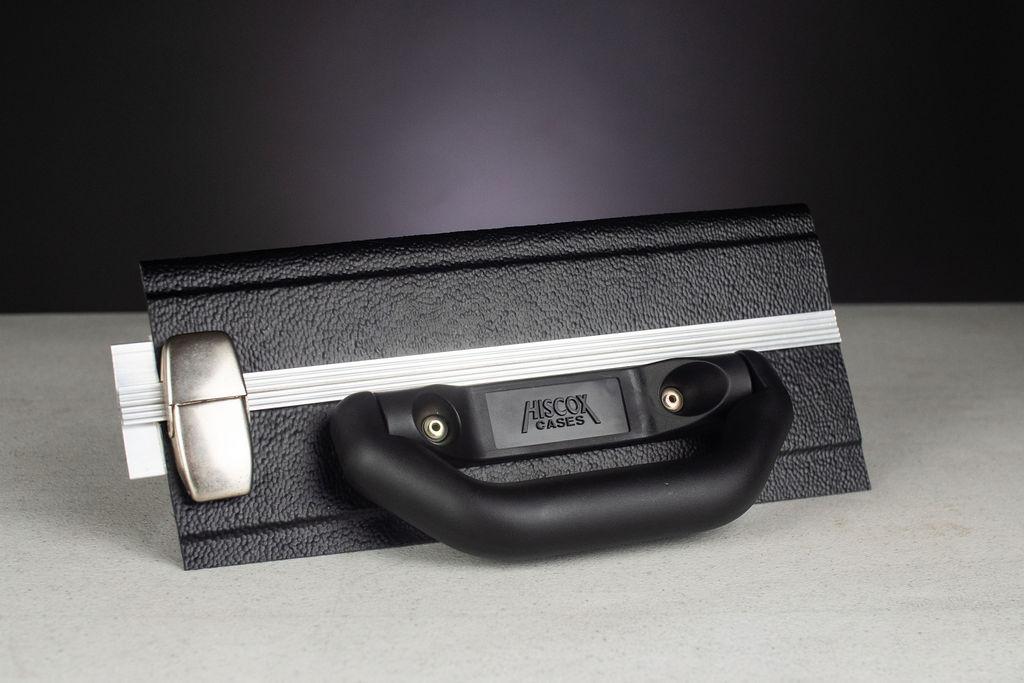
And the backpack strap system turns any Hiscox case into a rucksack. Four D-ring points, riveted through the aluminium, take a dual-strap backpack that distributes the weight across both shoulders. Hands free, full protection. It's the best of both worlds.
Who Needs One
If you own a guitar worth more than a couple of hundred pounds, you need a hard case. Not eventually. Now.
If you gig, travel, or leave the house with your instrument for any reason, a hard case is the difference between peace of mind and a very expensive phone call to a luthier.
What to Look For
- Crush strength. Anything above 300kg is decent. Hiscox Pro II cases are rated at 500kg.
- Bonded construction. The foam should be part of the shell, not a separate piece sitting inside. This is what separates Hiscox from most competitors.
- Metal hardware mounting. Latches and hinges riveted through metal, not plastic. Plastic-mounted hardware loosens over time.
- Weight. If the case is too heavy, you won't use it. Under 5kg for an electric case is ideal.
- Fit. A case that's too large lets the guitar move inside. Too small and you're forcing it. Use a case finder to match your instrument, and add cushion pads for a perfect fit.
Browse Hiscox cases and find the right fit for your guitar.