The Luthier
Before there were cases, there were guitars.
Brynn Hiscox was a luthier, building bowl-back acoustic guitars by hand in Staffordshire. Beautiful instruments with a following that grew quickly. Dave Gilmour played one. Joan Armatrading played one. Chas and Dave played them. Plenty of others did too.
Then one day, Brynn sold a guitar to an American buyer. It was shipped across the Atlantic in a standard case, the kind most people used without thinking twice. When it arrived, the guitar was in splinters.
Most people would have blamed the courier. Brynn blamed the case.
Born Out of Necessity
Brynn wasn't the kind of person to write it off as bad luck. He set about designing something better. Testing materials, developing processes, engineering a case that would actually do what a case is supposed to do. Protect the instrument inside it.
The design brief he gave himself was simple: ultra lightweight, but strong enough to stand on.
It was slow, painstaking work. The original tooling was bulky and cumbersome. Every chemical compound was mixed by hand. The bending of the aluminium, the structural spine that would become a defining feature of every Hiscox case, was, by Brynn's own admission, extraordinarily difficult to get right.
One of the key design decisions was the aluminium. He figured out early on that hardware couldn't just bolt into plastic. It would flex and fail. So he designed an aluminium valance that runs the full perimeter of every Hiscox case, and riveted all the hardware through that instead. Most competitors still don't do this. It's a detail most people never notice, and it's the reason the cases outlast almost anything else on the market.
But he got it right. And in 1985, the factory opened.
One building. One location. The same one it would occupy for the next forty years.
Twenty Thousand a Year
Brynn built the business the same way he built the cases. By hand. He drove to every music shop in the country, walked in with a case, and stood on it. That was the sales pitch. No brochure, no discount. Just a man standing on his own product. It worked. At the company's height, six or seven hundred shops across the UK were stocking Hiscox cases.
At its peak, the factory was producing twenty thousand cases a year. Every single one handmade. Global distribution, including America.
The brand became the gold standard. Walk into any boutique guitar workshop in Europe and you'll find Hiscox cases. Many independent makers won't use anything else. The strength, the weight, the heritage. It earned a reputation that, forty years on, still holds.
What Changed
Then COVID happened. And after it, nothing quite went back to normal.
The supply chain fractured. American distribution was lost. Not through lack of demand, but because the factory simply couldn't supply fast enough. The broader market shifted too. Fewer guitars sold meant fewer cases needed. The bigger trade clients started ordering less and less.
The direct market helped. A hundred or so cases a month, shipped straight to players all over the world. But it wasn't enough to offset what was happening on the other side of the balance sheet.
The Factory Floor
Making a Hiscox case is skilled work. The factory had several distinct areas, each requiring months of training before someone could work independently.
- Moulding -vacuum-forming the ABS shells
- Trimming -precision cutting that determines how everything fits downstream
- Carcase -bending the aluminium valance, riveting it in, attaching all hardware
- Foam room -folding cloth around presses and injecting foam to create the interior
- Tucking and finishing -final assembly
- Quality control -the last line of defence
Every area is a specialism. You can't walk in off the street and do any of it. Six months was roughly how long it took before someone was truly up to speed.
After COVID, finding people willing to stay long enough to learn became almost impossible. They'd come for a few months, absorb all the training, and then disappear. Agency work, higher wages, different approaches to recruitment. Nothing seemed to stick. The pattern that had held for decades, staff staying for years and passing knowledge along, just stopped.
Management was drafted onto the factory floor to keep production moving. Nearly a full year was spent in the foam room alone, making cases by hand just to keep up.
The Numbers
Energy bills were climbing, and in a factory that relies on heat for vacuum forming and foam injection, that mattered enormously. Wages were rising. Thresholds were dropping. Order books were shrinking.
For three, maybe four years, the company lived month to month. Every avenue was explored. New marketing. New sales approaches. New ways of reaching customers. Every idea that might keep the doors open was tried.
Eventually, the numbers told a story that effort alone couldn't rewrite. Manufacturing this product, in this country, at this cost, was no longer viable.
The Hardest Conversation
There were thirteen or fourteen people left in the factory. They were gathered together and given the news.
The plan, at first, was simply to close. After years of losses, the thought of anyone wanting to buy the company seemed absurd. Why would they? Same country, same conditions, same economics. So instead: close the doors, fulfil what could be fulfilled, and wind it down with dignity.
Word went out to every customer, every maker, every trade partner around the world. The message was straightforward: we're closing, and this is your chance to place one last order.
The Response
What happened next was overwhelming.
Orders came in their droves. An absolute flood. But alongside them, a wave of messages. From makers, from musicians, from shops and distributors in countries where a Hiscox case had been quietly doing its job for decades. People writing simply to say thank you. For the quality. For the consistency. For being what they'd always relied on.
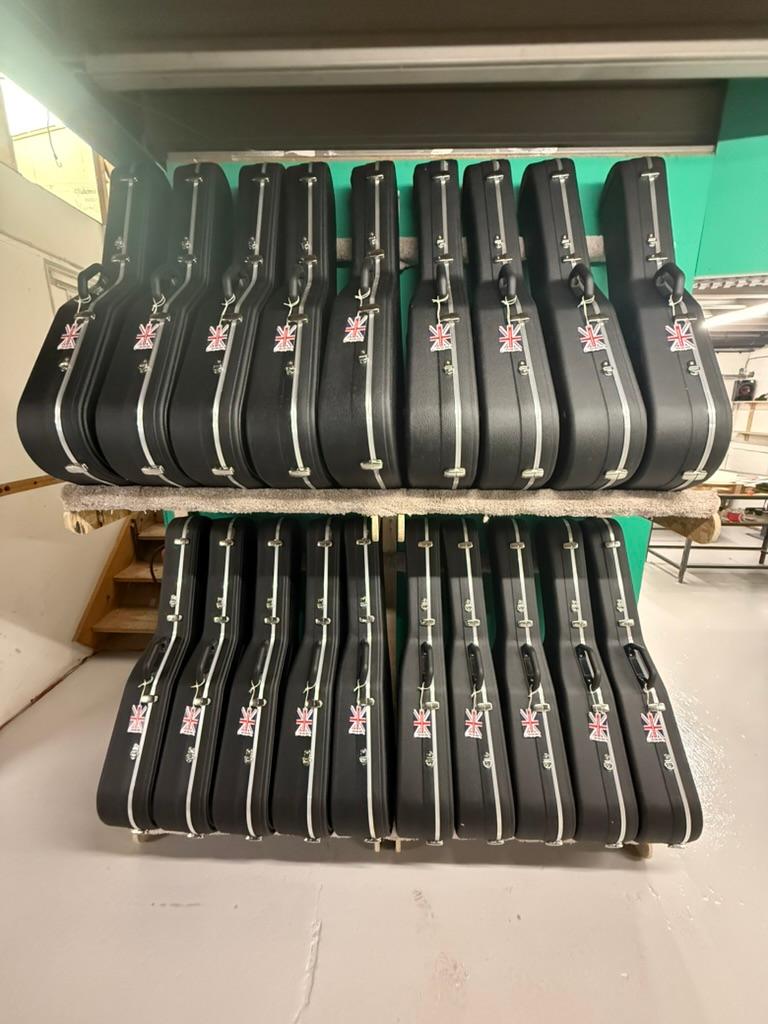
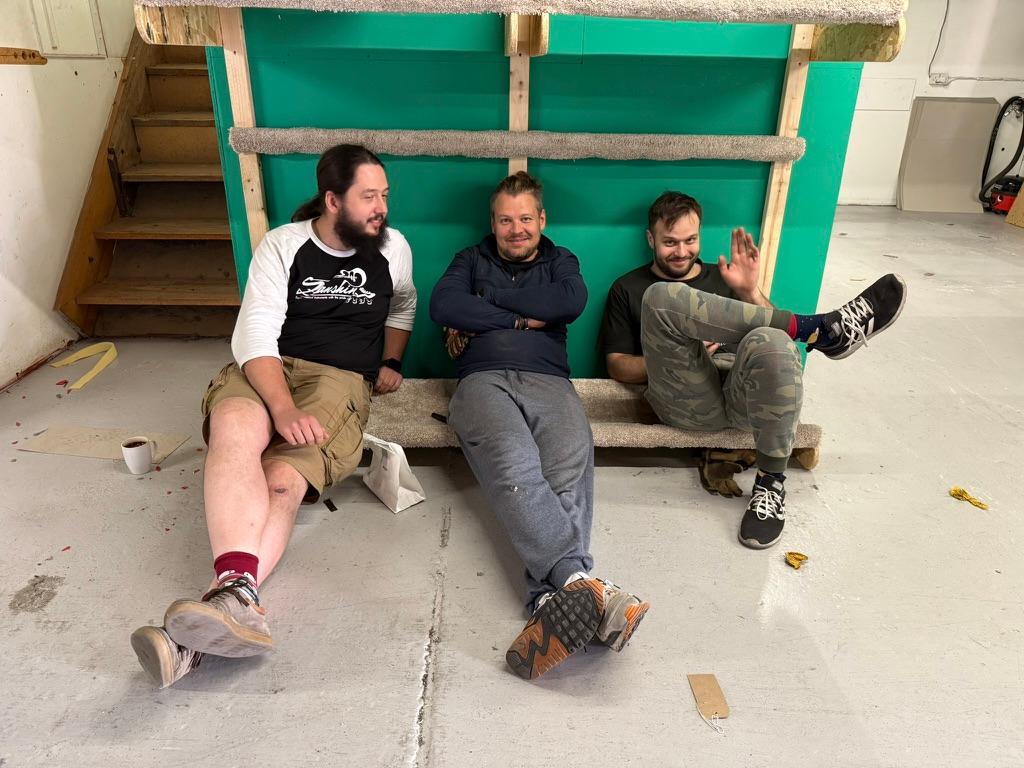
The team dug in. In the face of redundancy, knowing these were the last cases they'd ever make, they put in an extraordinary effort. Resources were managed down to the last sheet of ABS, the last length of aluminium. No new material orders. It had to be precise, and it was. They managed it down to the case.
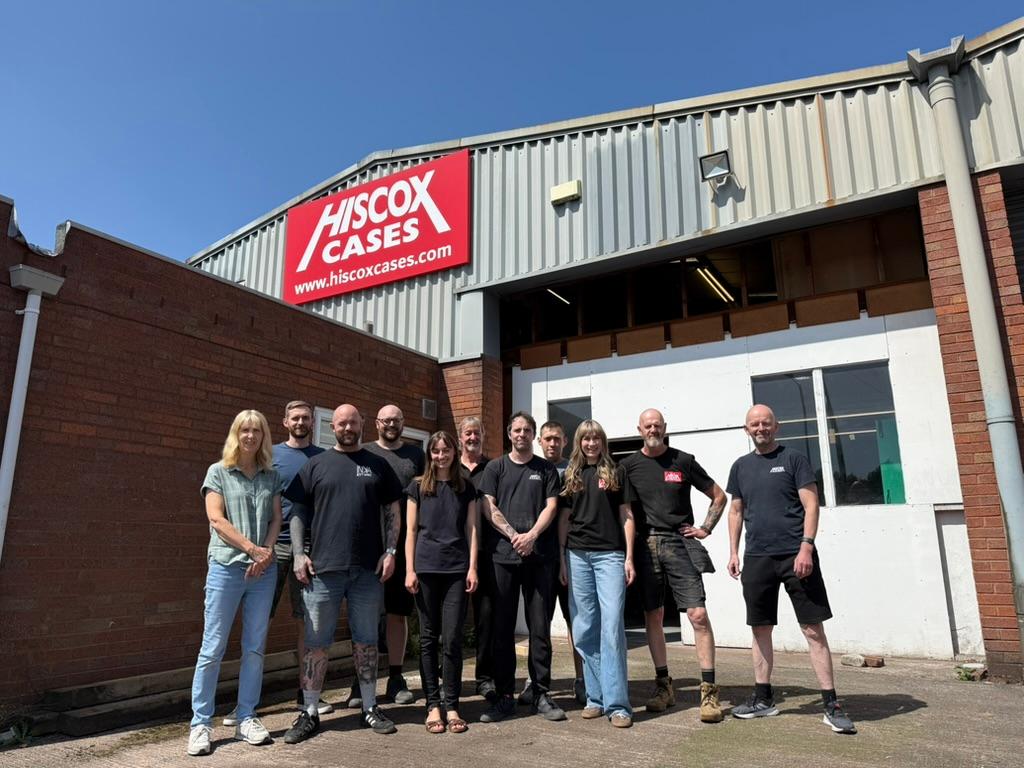
The staff photo taken outside the factory was the last one ever taken there.
What Came Next
During those final months, offers for the company began arriving. More than anyone expected.
Brynn compiled everything. Every financial detail, every hard truth, every number that painted the real picture. He sent it all out to every serious enquirer. No spin, no softening. If you wanted to buy Hiscox Cases, you needed to see the ugly truth first.
Most offers evaporated on contact with reality. A few remained. Some wanted to take production east. Others had different plans. But one stood out.
Ruf Technologies. A young, hungry team based in Poland with deep expertise in composite materials. Smart, switched-on, and located right in Europe, perfectly positioned to supply the independent makers who had been the backbone of Hiscox Cases from the very beginning.
It made sense. Brynn accepted their offer, and Ruf's team began travelling to Staffordshire to observe the process, learn the craft, and prepare for what would come next.
This is the first part of The Hiscox Story. Next: Griselda's Last Journey - dismantling forty years, navigating Brexit, and loading a six-tonne vacuum former onto a truck with one inch to spare.